



Professional RV Removal Across Denver and the Front Range
An RV can be a great investment when it is being used for weekend trips, family vacations, camping adventures, and long-distance travel. But once an RV stops moving, it can quickly become one of the largest unwanted items on a property. An aging motorhome parked beside the house, a travel trailer sitting behind a garage, or a damaged camper occupying valuable storage space can become a problem that gets harder to deal with every year.
RV Disposal provides professional junk RV removal throughout Denver and the surrounding Front Range communities. We help homeowners, businesses, contractors, property managers, storage facilities, estate representatives, and other property owners remove unwanted recreational vehicles in a wide range of conditions.
Whether you’re dealing with an old motorhome, non-running camper, damaged travel trailer, fifth wheel, toy hauler, or recreational vehicle that has simply been sitting unused for years, RV Disposal can help you take the next step toward clearing your property.
When Your RV Becomes More Work Than It’s Worth
Most recreational vehicles don’t become unwanted overnight.
They usually become projects first.
An owner may plan to replace the tires, repair the engine, reseal the roof, rebuild the generator, or renovate the interior. The project gets postponed, and the RV remains parked.
Then another season passes.
Eventually, the recreational vehicle may have several problems at once. The tires deteriorate. The battery dies. The roof develops leaks. The plumbing no longer works. The engine needs major repairs.
At that point, bringing the RV back to usable condition can require a substantial investment.
If the recreational vehicle has little resale value, continuing to spend money on it may not make financial sense.
Junk RV removal gives property owners an alternative to keeping an expensive, deteriorating vehicle that they no longer use.
Colorado Weather Can Take a Toll on Aging RVs
Denver’s climate creates unique challenges for recreational vehicles stored outdoors.
Intense sunshine and ultraviolet exposure can gradually deteriorate tires, rubber seals, awnings, roof membranes, fiberglass, exterior plastics, and other materials.
Winter introduces another set of problems.
Freezing temperatures can affect plumbing systems, batteries, seals, and other components. Snow and ice can place additional weight on aging roofs, while repeated freezing and thawing can worsen existing cracks and weaknesses.
Spring moisture and summer thunderstorms can expose damaged roofing and exterior seals.
Wind, dust, and temperature fluctuations can further accelerate deterioration.
An RV that sits outdoors year after year without regular maintenance can eventually develop problems that are far more expensive to repair than the recreational vehicle is worth.
We Remove Many Types of Unwanted RVs
RV Disposal works with a wide variety of recreational vehicles throughout Denver and the surrounding Front Range.
Our junk RV removal services can include:
- Class A motorhomes
- Class B camper vans
- Class C motorhomes
- Travel trailers
- Fifth wheel campers
- Toy haulers
- Pop-up campers
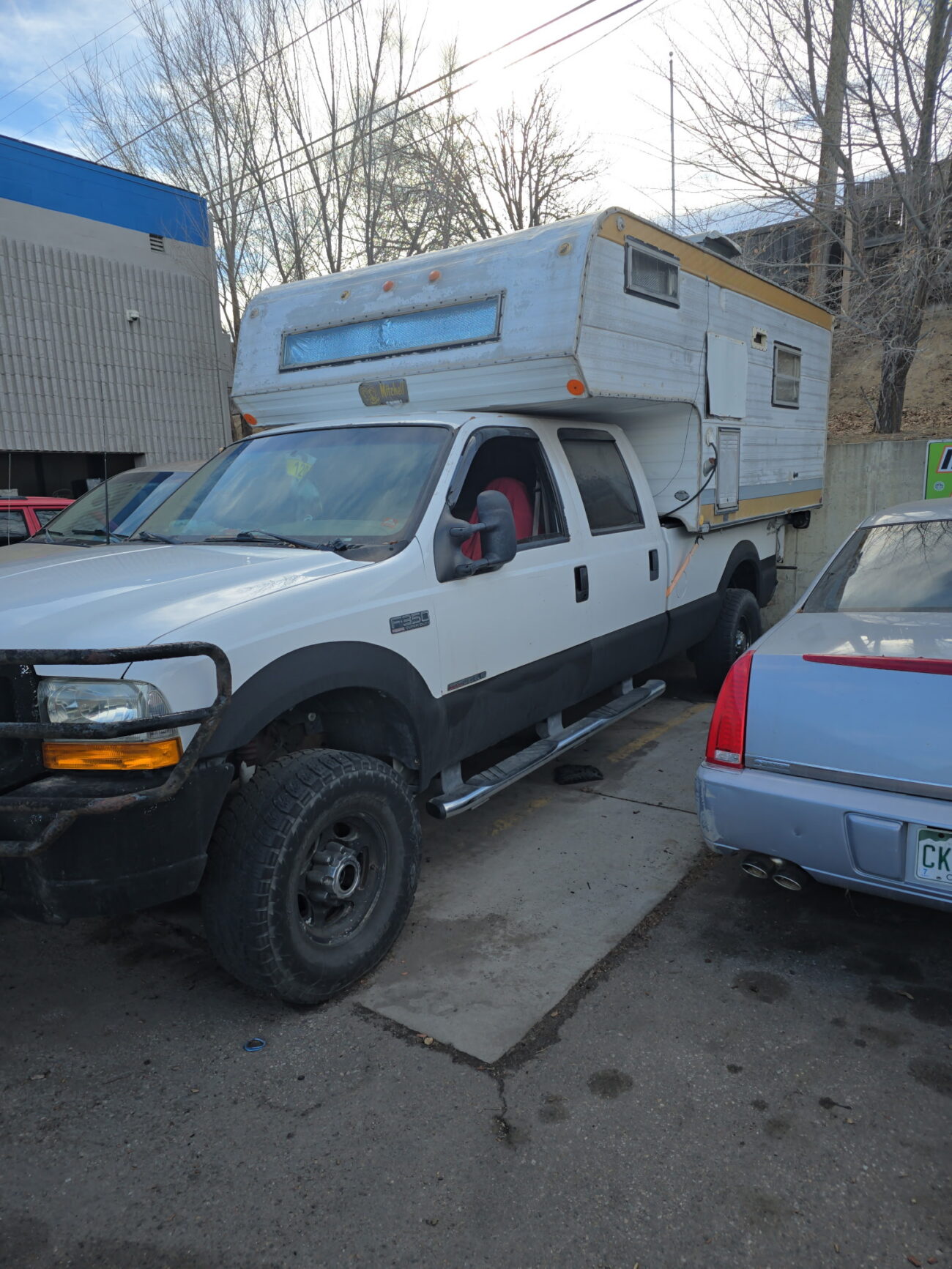
- Truck campers
- Hybrid travel trailers
- Park model RVs
- Vintage campers
- Salvage motorhomes
- Non-running RVs
- Water-damaged campers
- Storm-damaged RVs
- Fire-damaged recreational vehicles
- Abandoned campers
- Severely deteriorated travel trailers
An RV doesn’t need to be completely destroyed to become a junk removal project.
Some owners simply don’t use their recreational vehicle anymore. Others are dealing with serious mechanical problems, structural damage, water intrusion, or years of neglect.
Understanding the vehicle’s condition helps determine the most appropriate way to remove it.
The True Cost of Keeping an Old RV
The purchase price isn’t the only expense associated with recreational vehicle ownership.
Older RVs can require constant maintenance.
Tires need replacement even when the vehicle isn’t being driven. Batteries deteriorate. Roofs require inspection and resealing. Plumbing systems can freeze. Generators require maintenance. Engines and transmissions eventually need repairs.
Then there are storage and insurance expenses.
An RV that isn’t being used can continue generating bills without providing any real benefit.
For some owners, the biggest cost isn’t even the repair bill.
It’s the space.
A large motorhome or travel trailer can consume an entire driveway, side yard, parking area, or section of commercial property.
Removing the RV can eliminate ongoing expenses while giving the property owner back space that can actually be used.
Why Selling a Junk RV Isn’t Always Easy
Selling an old recreational vehicle can be difficult when the vehicle is damaged or doesn’t run.
Buyers often want detailed information about the engine, transmission, generator, appliances, plumbing, roof, electrical system, tires, frame, and interior.
If the RV has water damage or hasn’t moved in years, potential buyers may be hesitant to take on the project.
Even when someone wants to purchase it, transportation becomes another issue.
A non-running motorhome can’t simply be driven away.
A large travel trailer may require specialized equipment to move.
This means an owner can spend weeks creating listings, answering messages, scheduling appointments, and negotiating with potential buyers without ever actually getting the RV removed.
When the primary objective is clearing the property, professional junk RV removal can be a much more practical option.
Non-Running RVs Can Be Difficult to Move
One of the most common reasons Denver property owners contact RV Disposal is because their recreational vehicle no longer runs.
A motorhome that hasn’t moved for years may have flat or dry-rotted tires, seized brakes, dead batteries, damaged suspension components, or other mechanical problems.
Travel trailers can develop similar issues.
Wheel bearings may deteriorate. Tires can fail. Brakes may seize. Vegetation can grow around the wheels and chassis.
The location of the RV can also affect the removal process.
A motorhome may be parked beside a house or commercial building. A camper could be positioned behind a narrow gate. A fifth wheel might be underneath trees or surrounded by other vehicles.
Evaluating the condition and location beforehand helps determine what equipment and removal approach may be appropriate.
Residential and Commercial RV Removal
Unwanted recreational vehicles aren’t limited to residential properties.
RV Disposal provides junk RV removal for a variety of customers throughout Denver and the Front Range, including:
- Homeowners
- Property managers
- Storage facilities
- RV parks
- Campgrounds
- Contractors
- Commercial property owners
- Real estate investors
- Estate representatives
- Apartment communities
- Mobile home communities
- Homeowners associations
A recreational vehicle may have been inherited as part of an estate, abandoned by a former tenant, left behind after a property purchase, or simply become too expensive to keep.
Whatever the reason, removing it can make the property easier to maintain and create room for future improvements.
End-of-Life RV Disposal Requires Proper Handling
A recreational vehicle contains much more than a frame and four wheels.
Inside an RV you can find steel, aluminum, copper wiring, fiberglass, plastics, glass, appliances, insulation, batteries, propane components, and automotive fluids.
When a recreational vehicle reaches the end of its useful life, these materials should be handled responsibly.
Whenever practical, recoverable materials and salvageable components can be separated before final disposal.
Batteries, fluids, propane equipment, and other potentially hazardous materials also require appropriate handling.
RV Disposal helps Denver-area property owners remove unwanted recreational vehicles while emphasizing responsible end-of-life disposal.
If your old RV has been sitting on your property for years, waiting another year probably won’t make the situation easier.
Getting it removed can give you back valuable space, eliminate ongoing expenses, and finally put an end to a project you may have been postponing for far too long.Getting an Unwanted RV Out of Your Way
Large recreational vehicles aren’t easy to move, especially when they’ve been sitting in one location for an extended period. An old motorhome or travel trailer may look like a simple towing job from a distance, but its condition and surroundings can make removal considerably more complicated.
RV Disposal starts by gathering information about the recreational vehicle and where it is located. The type of RV, approximate size, condition, tire condition, and accessibility all help determine what may be required.
Photos can also be useful. Pictures of the RV, driveway, gates, fences, buildings, trees, and surrounding property can help identify potential access challenges before the removal appointment.
Once the project has been evaluated, an appropriate removal plan can be established. Depending on the circumstances, heavy-duty towing equipment, hauling trailers, winching systems, or specialized recovery equipment may be necessary.
The goal is to safely secure the recreational vehicle and haul it away without turning your property into another cleanup project.
Serving Denver and the Surrounding Front Range
RV Disposal provides junk RV removal throughout Denver and communities across the surrounding metropolitan area.
Our service area includes:
- Denver
- Aurora
- Lakewood
- Arvada
- Westminster
- Thornton
- Centennial
- Littleton
- Englewood
- Commerce City
- Northglenn
- Broomfield
- Parker
- Castle Rock
- Highlands Ranch
- Lone Tree
- Golden
- Wheat Ridge
- Edgewater
- Sheridan
- Morrison
- Brighton
- Erie
- Lafayette
- Louisville
- Superior
- And surrounding Front Range communities
Whether your RV is parked in a residential driveway, behind a commercial property, at a storage facility, or on acreage outside the city, RV Disposal can evaluate the project and determine an appropriate removal solution.
Removing RVs From Estates and Newly Purchased Properties
Not every unwanted RV belongs to the person who originally purchased it.
A family may inherit a motorhome after settling an estate. A new homeowner may discover an old camper behind a garage. A real estate investor may purchase property where an abandoned travel trailer has been sitting for years.
In these situations, the vehicle’s history may be unclear.
Nobody may know when it last ran.
The keys might be missing.
The tires could be severely deteriorated.
Maintenance records may no longer exist.
Once the appropriate ownership and authorization requirements have been addressed, the recreational vehicle can be evaluated based on its current condition and location.
An unknown history doesn’t automatically mean an RV cannot be removed.
Don’t Keep Paying for an RV You Never Use
An unwanted recreational vehicle can continue costing money even when it hasn’t traveled a single mile in years.
Storage fees are one obvious expense.
An owner may continue paying for a storage space every month simply because they don’t know what else to do with the RV.
Insurance and registration costs can also continue.
Then there are repairs.
Even a recreational vehicle that’s sitting still may need tires, batteries, roof maintenance, plumbing repairs, or protection from weather-related damage.
Eventually, the total cost of keeping the RV can become difficult to justify.
Removing the recreational vehicle can eliminate those recurring expenses while giving you back the space it occupies.
Commercial Junk RV Removal Throughout the Denver Area
Commercial properties can face recreational vehicle removal challenges just as easily as residential properties.
Storage facilities may have abandoned RVs occupying spaces that could otherwise be rented.
Apartment communities may have unauthorized campers taking up parking.
RV parks and campgrounds may have older units that are no longer suitable for guests.
Contractors and developers can also discover recreational vehicles on properties scheduled for renovation, demolition, or redevelopment.
RV Disposal works with commercial customers throughout Denver and the Front Range to evaluate these projects and develop practical removal solutions after the appropriate authorization has been established.
Why RV Removal Is More Complicated Than Ordinary Towing
A recreational vehicle can be significantly larger and heavier than a standard passenger vehicle.
Large motorhomes and trailers can also become structurally compromised after years of neglect.
An old RV may have:
- Flat or dry-rotted tires
- Seized brakes
- Damaged axles
- Deteriorated suspension
- Failing wheel bearings
- Water-damaged flooring
- Structural deterioration
- Dead batteries
- Mechanical failures
Property access can create additional complications.
A travel trailer may be sitting behind a narrow gate. A motorhome could be parked beside a building. A fifth wheel may be surrounded by vehicles or positioned underneath low tree branches.
Evaluating these conditions ahead of time helps determine how the recreational vehicle can be removed safely and efficiently.
Why Denver Property Owners Choose RV Disposal
RV Disposal specializes in helping customers get rid of recreational vehicles that have become unwanted, damaged, abandoned, or too expensive to repair.
Each project is evaluated individually based on the RV’s type, size, condition, location, and accessibility.
Our Denver-area services include:
- Junk RV removal
- Motorhome removal
- Camper disposal
- Travel trailer hauling
- Fifth wheel removal
- Toy hauler removal
- Pop-up camper removal
- Non-running RV recovery
- Storm-damaged RV removal
- Water-damaged camper removal
- Fire-damaged RV removal
- Estate RV removal
- Residential RV removal
- Commercial RV removal
Whether your RV has been parked behind the house for two years or twenty, RV Disposal can help you determine the next step.
Frequently Asked Questions About Denver RV Removal
Can you remove a motorhome that doesn’t run?
Yes. Non-running recreational vehicles are a common reason property owners seek professional RV removal. The condition and accessibility of the vehicle help determine the appropriate removal method.
Can you remove a camper with flat tires?
Yes. Flat, damaged, or dry-rotted tires are common on older RVs. Providing that information before pickup helps determine what equipment may be necessary.
Do you remove water-damaged RVs?
Yes. RV Disposal can assist with recreational vehicles affected by roof leaks, moisture intrusion, deteriorated flooring, and other forms of water damage.
Can you remove fifth wheels and travel trailers?
Yes. We work with fifth wheels, travel trailers, toy haulers, campers, and many different types of motorhomes.
Can an RV be removed from a storage facility?
Yes. Recreational vehicles can be removed from storage facilities, campgrounds, commercial lots, and other locations once the appropriate authorization has been established.
Do you work with commercial property owners?
Yes. RV Disposal works with contractors, property managers, developers, storage facilities, businesses, apartment communities, and other commercial customers.
Reclaim the Space Your RV Has Been Taking
An old RV can become easy to ignore when it’s been sitting in the same place for years.
But every month it remains there, it continues taking up space and becoming more difficult to maintain.
Whether you’re dealing with a non-running motorhome, an abandoned travel trailer, a weathered camper, or an aging fifth wheel, RV Disposal can help you clear the property and move forward.
We proudly provide junk RV removal throughout Denver, Aurora, Lakewood, Arvada, Westminster, Thornton, Centennial, and surrounding Front Range communities.
If you’re ready to clear your driveway, backyard, storage area, commercial lot, or acreage, contact RV Disposal today to request a quote for junk RV removal in Denver, Colorado.
